
Effectiveness of Game-based Circuit Exercises on Physical Functions and Quality of Life in Stroke Survivors: A Randomised Controlled Trial in Malaysia
Game-Based Circuit Exercises among Stroke Survivors
Vol. 21 No. 2 : 2026 (964-987)

Abstract
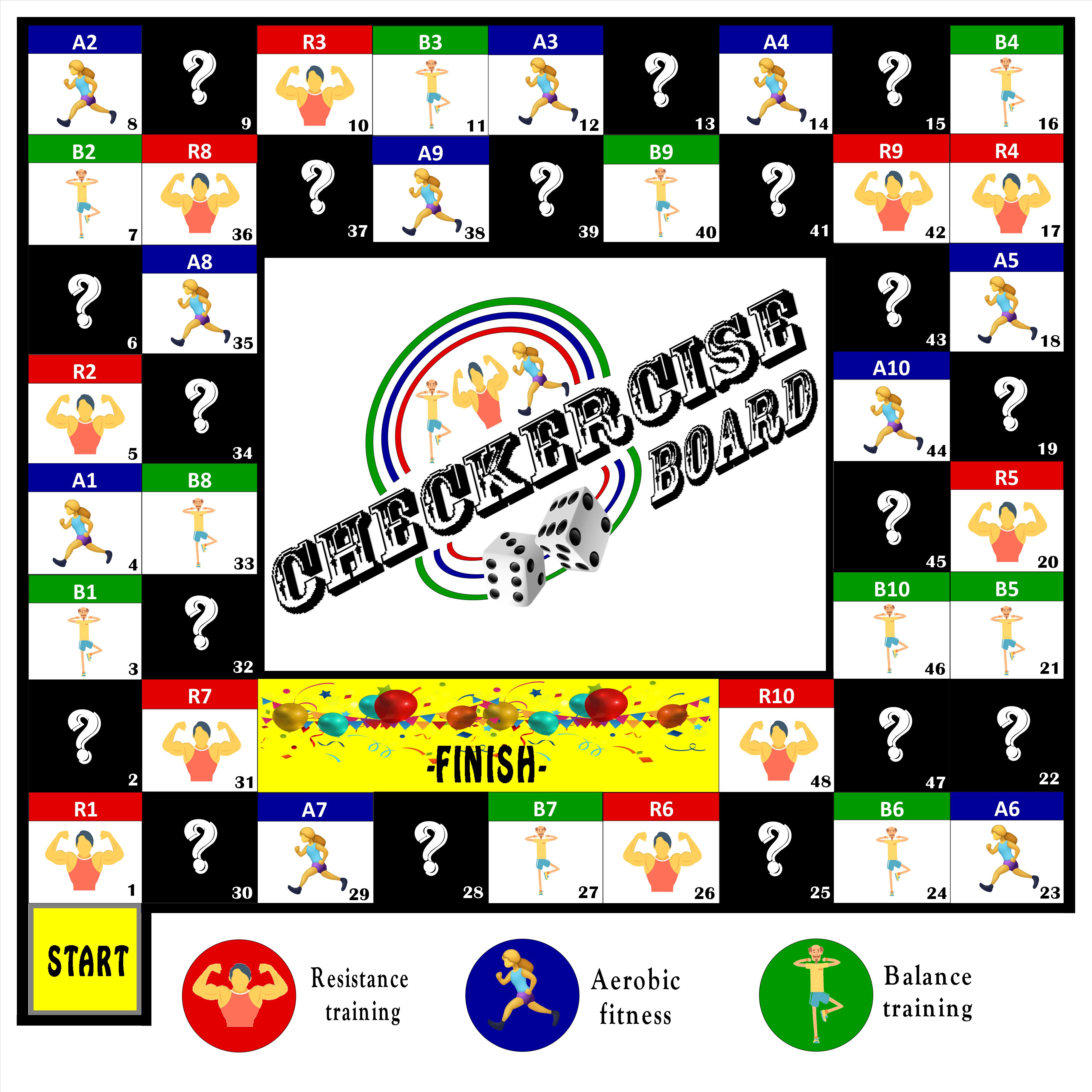
Stroke survivors often experience functional decline that limits independence and reduces quality of life. Circuit exercise enhances functional outcomes; however, evidence on incorporating gaming into rehabilitation remains scarce. Checkercise®, a novel game-based circuit exercise, was developed to integrate therapeutic training with engaging gameplay. This study examined its effectiveness compared with conventional circuit exercise. A parallel randomised controlled trial was conducted with 88 subacute stroke survivors (mean age = 58.6 + 9.9 years), randomised to experimental (Checkercise®) or control groups. Both groups received supervised sessions twice weekly for 12 weeks. Outcomes included the 30-second chair rise test (lower limb strength), Dynamic Gait Index (DGI) (dynamic balance), 6-minute Walk Test (6mWT) (aerobic endurance) and Short Form-36 (SF-36) (quality of life). Assessments were performed at baseline (pre-assessment) and at 12, 24 and 36 weeks. Mixed-model ANOVA was used for analysis. Results showed significant interaction effects (p < 0.05) with a small effect size (0.03–0.04) for lower limb strength and SF-36 physical and mental scores, with greater improvements in the experimental group (30 second chair rise test: +34%; SF-36 physical: +41%; mental: +29%) versus controls. Significant group effects (p<0.05) with a small effect size (0.04–0.05) were also observed for DGI (+18% versus +16%) and 6mWT (+30% versus +25%). Post hoc analyses demonstrated sustained improvements at six months (p < 0.05) for 30-second chair rise test (10%), DGI (4%), 6mWT (12.8%) and the SF-36 physical scores (8.9%) in the experimental group, while the control group retained gains only in DGI (4%) (p<0.05). In conclusion, Checkercise® was effective in improving and sustaining physical functions and quality of life, supporting its potential as an engaging rehabilitation strategy.
Keywords :
Function; quality of life; stroke,
Correspondance Address
norazlin8@ukm.edu.my
References
Akinci, M., Burak, M., Kasal, F.Z., Özaslan, E.A., Huri, M., Kurtaran, Z.A. 2024. The effects of combined virtual reality exercises and robot-assisted gait training on cognitive functions, daily living activities and quality of life in high-functioning individuals with subacute stroke. Percept Mot Skills 131(3): 756-69. https://doi.org/10.1177/00315125241235420
Akinci, M., Burak, M., Yaşar, E., Kılıç, R.T. 2023. The effects of robot-assisted gait training and virtual reality on balance and gait in stroke survivors: A randomized controlled trial. Gait Posture 103: 215-22. https://doi.org/10.1016/j.gaitpost.2023.05.013
Alatawi, S. 2021. Current clinical practices of Saudi physiotherapists in stroke rehabilitation. J Acute Care Phys Ther 12(4): 194-204. https://doi.org/10.1097/JAT.0000000000000165
Ali, M., Khan, S.U., Asim, H.A.B. 2020. Effects of individual task-specific training versus group circuit training on balance and ambulation in subacute stroke. Rawal Med J 45(1): 233-5.
Ali, H.U., Shafique, K., Rehman, T.U., Shah, A.A., Younas, M.W., Khan, K., Idrees, K. 2021. Treatment and assessment preferences for the management of stroke among physical therapists working in clinical settings. Indo Am J Pharm Sci 8(2): 159-65. https://doi.org/10.5281/zenodo.4543721
Amala, S., Chippala, P. 2024. Effect of sit-to-stand training on balance, muscle strength and activities of daily living in patients with stroke: A randomised controlled trial. J Clin Diagn Res 18(2): 5-8. https://doi.org/10.7860/JCDR/2024/65339.19081
Amanzonwé, E.R., Kossi, O., Noukpo, S.I., Adoukonou, T., Hansen, D., Triccas, L.T., Feys, P. 2023. Physiotherapy practices in acute and subacute stroke in a low-resource country: A prospective observational study in Benin. J Stroke Cerebrovasc Dis 32(11): 107353. https://doi.org/10.1016/j.jstrokecerebrovasdis.2023.107353
Anwar, N., Karimi, H., Ahmad, A., Gilani, S.A., Khalid, K., Aslam, A.S., Hanif, A. 2022. Virtual reality training using Nintendo Wii games for patients with stroke: Randomized controlled trial. JMIR Serious Games 10(2): 1-8. https://doi.org/10.2196/29830
Bovonsunthonchai, S., Aung, N., Hiengkaew, V., Tretriluxana, J. 2020. A randomized controlled trial of motor imagery combined with structured progressive circuit class therapy on gait in stroke survivors. Sci Rep 10: 6945. https://doi.org/10.1038/s41598-020-63914-8
Buvarp, D., Viktorisson, A., Axelsson, F., Lehto, E., Lindgren, L., Lundstrom, E., Sunnerhagen, K. 2023. Physical activity trajectories and functional recovery after acute stroke among adults in Sweden. JAMA Netw Open 6(5): e2310919. https://doi.org/10.1001/jamanetworkopen.2023.10919
Carrillo, C., Tilley, D., Horn, K., Gonzalez, M., Coffman, C., Hilton, C., Mani, K. 2023. Effectiveness of robotics in stroke rehabilitation to accelerate upper extremity function: Systematic review. Occup Ther Int 2023(1): 7991765. https://doi.org/10.1155/2023/7991765
Chang, H., Song, Y., Cen, X. 2022. Effectiveness of augmented reality for lower limb rehabilitation: A systematic review. Appl Bionics Biomech 2022(1): 4047845. https://doi.org/10.1155/2022/4047845
Cohen, J. 2013. Statistical Power Analysis for the Behavioral Sciences. 2nd ed. New York: Routledge, pp. 66-74. https://doi.org/10.4324/9780203771587
de Rooij, I.J.M., van de Port, I.G.L., Punt, M., Abbink-Van Moorsel, P.J.M., Kortsmit, M., van Eijk, R.P.A., Visser-Meily, J.M.A., Meijer, J.W.G. 2021. Effect of virtual reality gait training on participation in survivors of subacute stroke: A randomized controlled trial. Phys Ther 101(5): pzab051. https://doi.org/10.1093/ptj/pzab051
de Sousa, D.G., Harvey, L.A., Dorsch, S., Varettas, B., Jamieson, S., Murphy, A., Giaccari, S. 2019. Two weeks of intensive sit-to-stand training in addition to usual care improves sit-to-stand ability in people who are unable to stand up independently after stroke: A randomised trial. J Physiother 65(3): 152-8. https://doi.org/10.1016/j.jphys.2019.05.007
Domínguez-Téllez, P., Moral-Muñoz, J.A., Salazar, A., Casado-Fernández, E., Lucena-Antón, D. 2020. Game-based virtual reality interventions to improve upper limb motor function and quality of life after stroke: Systematic review and meta-analysis. Games Health J 9(1): 1-10. https://doi.org/10.1089/g4h.2019.0043
Dorman, P., Slattery, J., Farrell, B., Dennis, M., Sandercock, P. 1998. Qualitative comparison of the reliability of health status assessments with the EuroQol and SF-36 questionnaires after stroke. Stroke 29(1): 63-8. https://doi.org/10.1161/01.STR.29.1.6
Dujovic, S.D., Djordjevic, O., Vidakovic, A., Mitrovic, S., Grajic, M., Tomic, D.T., Rosic, S., Radic, A., Konstantinovic, L. 2025. Inequities in stroke recovery: Examining sociodemographic predictors of rehabilitation success. Healthcare 13(14): 1739. https://doi.org/10.3390/healthcare13141739
Eichinger, F.L.F., Soares, A.V., Noveletto, F., Sagawa Júnior, Y., Bertemes Filho, P., Domenech, S.C. 2020. Serious game for locomotor rehabilitation of hemiparetic stroke patients. Fisioter Mov 33: e0033-ao16. https://doi.org/10.1590/1980-5918.033.ao16
Eng, J.J., Dawson, A.S., Chu, K.S. 2004. Submaximal exercise in persons with stroke: Test-retest reliability and concurrent validity with maximal oxygen consumption. Arch Phys Med Rehabil 85(1): 113-8. https://doi.org/10.1016/S0003-9993(03)00436-2
Fahmy, M., Samir, E., Sharaf, M.A., Gharib, N.M., Shendy, W., Salem, Y., Samir, H., ElSayed, S.H. 2024. Effectiveness of virtual reality-based aerobic exercise on walking endurance, gait kinematics, and function in patients with chronic stroke: A double-blinded randomized controlled trial. Fizjoterapia Polska 24(3): 293-302. https://doi.org/10.56984/8ZG020AGXN
Feigin, V.L., Vos, T., Alahdab, F., Amit, A.M.L., Bärnighausen, T.W., Beghi, E., Beheshti, M., Chavan, P.P., Criqui, M.H., Desai, R., et al. 2021. Burden of neurological disorders across the United States from 1990 to 2017: A Global Burden of Disease Study. JAMA Neurol 78(2): 165-76. https://doi.org/10.1001/jamaneurol.2020.4152
Fonte, G., Schreiber, C., Areno, G., Masson, X., Chantraine, F., Schütz, G., Dierick, F. 2022. Metabolic energy expenditure and accelerometer-determined physical activity levels in post-stroke hemiparetic patients. J Stroke Cerebrovasc Dis 31(5): 106397. https://doi.org/10.1016/j.jstrokecerebrovasdis.2022.106397
Frigon, A. 2017. The neural control of interlimb coordination during mammalian locomotion. J Neurophysiol 117(6): 2224-41. https://doi.org/10.1152/jn.00978.2016
Intercollegiate Stroke Working Party. 2023. National Clinical Guideline for Stroke for the United Kingdom and Ireland. https://www.strokeguideline.org/ [Accessed on 2 December 2024].
Heart and Stroke Foundation of Canada. 2019. Rehabilitation Evidence Table 6.1: Mobility, Transfer and Balance (Canadian Stroke Best Practice Recommendations, 6th ed.). https://www.strokebestpractices.ca/ [Accessed on 30 November 2024].
Hollands, K.L., Pelton, T.A., Wimperis, A., Whitham, D., Tan, W., Jowett, S., Sackley, C.M., Wing, A.M., Tyson, S.F., Mathias, J., Hensman, M., Van Vliet, P.M. 2015. Feasibility and preliminary efficacy of visual cue training to improve adaptability of walking after stroke: Multi-centre, single-blind randomised controlled pilot trial. PLoS One 10(10): e0139261. https://doi.org/10.1371/journal.pone.0139261
Huang, W.Y., Tuan, S.H., Li, M.H., Hsu, P.T. 2022. Efficacy of a novel walking assist device with auxiliary laser illuminator in stroke patients: A randomized controlled trial. J Formos Med Assoc 121(3): 592-603. https://doi.org/10.1016/j.jfma.2021.06.019
Hurkmans, H.L., Ribbers, G.M., Streur-Kranenburg, M.F., Stam, H.J., Van Den Berg-Emons, R.J. 2011. Energy expenditure in chronic stroke patients playing Wii Sports: A pilot study. J Neuroeng Rehabil 8: 38. https://doi.org/10.1186/1743-0003-8-38
Jiang, L., Ding, H., Seo, H., Chun, B. 2025. Lifestyle and poststroke recovery: A 2-sample Mendelian randomization analysis. Medicine 104(41): e45115. https://doi.org/10.1097/MD.0000000000045115
Johar, M.N., Mohd Nordin, N.A. 2022. Web-based game-focused exercise in the home setting as an alternative to hospital-based exercise for stroke survivors: A case study. Malays Phys J 1(1): 62-8.
Johar, M.N., Mohd Nordin, N.A., Abdul Aziz, A.F. 2022a. The effect of game-based in comparison to conventional circuit exercise on functions, motivation level, self-efficacy and quality of life among stroke survivors. Medicine 101(2): e28580. https://doi.org/10.1097/MD.0000000000028580
Johar, M.N., Mohd Nordin, N.A., Mohd Yusoff, Y.A. 2022b. Effects of game-based task-oriented circuit training on physical functions of stroke survivors: A pilot study in a state hospital in Kelantan, Malaysia. Asian J Med Biomed 5(S2): 5-14. https://doi.org/10.37231/ajmb.2021.5.S2.454
Jones, C.J., Rikli, R.E., Beam, W.C. 1999. A 30-second chair-stand test as a measure of lower body strength in community-residing older adults. Res Q Exerc Sport 70(2): 113-9. https://doi.org/10.1080/02701367.1999.10608028
Jonsdottir, J., Cattaneo, D. 2007. Reliability and validity of the dynamic gait index in persons with chronic stroke. Arch Phys Med Rehabil 88(11): 1410-5. https://doi.org/10.1016/j.apmr.2007.08.109
Kafri, M., Myslinski, M.J., Gade, V.K., Deutsch, J.E. 2014. Energy expenditure and exercise intensity of interactive video gaming in individuals poststroke. Neurorehabil Neural Repair 28(1): 56-65. https://doi.org/10.1177/1545968313497100
Kang, D., Park, J., Jeong, I., Eun, S.D. 2022. Comparing the effects of multicomponent exercise with or without power training on the cardiorespiratory fitness, physical function, and muscular strength of patients with stroke: A randomized controlled trial. J Sports Med Phys Fitness 62(5): 722-31. https://doi.org/10.23736/S0022-4707.21.123060
Katona, M., Schmidt, R., Schupp, W., Graessel, E. 2015. Predictors of health-related quality of life in stroke patients after neurological inpatient rehabilitation: A prospective study. Health Qual Life Outcomes 13(1): 1-7. https://doi.org/10.1186/s12955-015-0258-9
Khan, F., Amatya, B., Elmalik, A., Lowe, M., Ng, L., Reid, I., Galea, M.P. 2016. An enriched environmental programme during inpatient neuro-rehabilitation: A randomized controlled trial. J Rehabil Med 48(5): 417-25. https://doi.org/10.2340/16501977-2081
Kim, I.C., Lee, B.H. 2012. Effects of augmented reality with functional electric stimulation on muscle strength, balance and gait of stroke patients. J Phys Ther Sci 24(8): 755-62. https://doi.org/10.1589/jpts.24.755
Kosak, M., Smith, T. 2005. Comparison of the 2-, 6-, and 12-minute walk tests in patients with stroke. J Rehabil Res Dev 42(1): 103-8. https://doi.org/10.1682/JRRD.2003.11.0171
Krishnamurthi, R.V., Ikeda, T., Feigin, V.L. 2020. Global, regional and country-specific burden of ischaemic stroke, intracerebral haemorrhage and subarachnoid haemorrhage: A systematic analysis of the Global Burden of Disease Study 2017. Neuroepidemiology 54(2): 171-9. https://doi.org/10.1159/000506396
Lee, S.M., Cynn, H.S., Yoon, T.L., Lee, J.H. 2017. Effects of different heel-raise-lower exercise interventions on the strength of plantarflexion, balance, and gait parameters in stroke survivors. Physiother Theory Pract 33(9): 706-15. https://doi.org/10.1080/09593985.2017.1346024
Lee, M.M., Shin, D.C., Song, C.H. 2016. Canoe game-based virtual reality training to improve trunk postural stability, balance, and upper limb motor function in subacute stroke patients: A randomized controlled pilot study. J Phys Ther Sci 28: 2019-24. https://doi.org/10.1589/jpts.28.2019
Lin, J.H., Hsu, M.J., Hsu, H.W., Wu, H.C., Hsieh, C.L. 2010. Psychometric comparisons of 3 functional ambulation measures for patients with stroke. Stroke 41(9): 2021-5. https://doi.org/10.1161/STROKEAHA.110.589739
Lin, C., Ren, Y., Lu, A. 2023. The effectiveness of virtual reality games in improving cognition, mobility, and emotion in elderly post-stroke patients: A systematic review and meta-analysis. Neurosurg Rev 46(1): 167. https://doi.org/10.1007/s10143-023-02061-w
Lin, P.L., Yu, L.F., Kuo, S.F., Wang, X.M., Lu, L.H., Lin, C.H. 2022. Effects of computer-aided rowing exercise systems on improving muscle strength and function in older adults with mild knee osteoarthritis: A randomized controlled clinical trial. BMC Geriatr 22(1): 1-11. https://doi.org/10.1186/s12877-022-03498-2
Martins, J.C., Nadeau, S., Aguiar, L.T., Scianni, A.A., Teixeira-Salmela, L.F., De Morais Faria, C.D.C. 2020. Efficacy of task-specific circuit training on physical activity levels and mobility of stroke patients: A randomized controlled trial. NeuroRehabilitation 47(4): 451-62. https://doi.org/10.3233/NRE-203207
Mazeas, A., Duclos, M., Pereira, B., Chalabaev, A. 2022. Evaluating the effectiveness of gamification on physical activity: Systematic review and meta-analysis of randomized controlled trials. J Med Internet Res 24(1): e26779. https://doi.org/10.2196/26779
Mpemba, M., Shula, H., Chiluba, B. 2020. Stroke disability and physiotherapy interventions: A quantitative evaluation of physiotherapy treatment approaches in Zambia. Indones J Disabil Stud 7(1): 92-100. https://doi.org/10.21776/ub.IJDS.2019.007.01.10
National Institute for Health and Care Excellence. 2023. Stroke Rehabilitation in Adults: Evidence Reviews for the Clinical and Cost-Effectiveness of Music Therapy for Adults after a Stroke. https://www.nice.org.uk/guidance/cg162 [Accessed on 1 June 2025].
Oh, G.S., Choi, Y.R., Bang, D.H., Cha, Y.J. 2017. Effects of step-up training on walking ability of stroke patients by different support surface characteristics. J Korean Soc Phys Med 12(3): 99-104. https://doi.org/10.13066/kspm.2017.12.3.99
Ojo Owolabi, M. 2010. Psychometric properties of the HRQOLISP-40: A novel, shortened multiculturally valid holistic stroke measure. Neurorehabil Neural Repair 24(9): 814-25. https://doi.org/10.1177/1545968310369113
Outermans, J.C., van Peppen, R.C., Wittink, H., Takken, T., Kwakkel, G. 2010. Effects of a high-intensity task-oriented training on gait performance early after a stroke: A pilot study. Clin Rehabil 24(11): 979-87. https://doi.org/10.1177/0269215509360647
Oza, N., Motar, P., Deshmukh, N. 2021. Effect of elliptical training for balance and gait training in patients with chronic stroke: A case report. Int J Med Res Health Sci 10(6): 118-22.
Pang, M.Y.C., Yang, L., Ouyang, H., Lam, F.M.H., Huang, M., Jehu, D.A. 2018. Dual-task exercise reduces cognitive-motor interference in walking and falls after stroke: A randomized controlled study. Stroke 49(12): 2990-8. https://doi.org/10.1161/STROKEAHA.118.022157
Park, Y., Lee, D., Lee, J. 2024. A comprehensive review: Robot-assisted treatments for gait rehabilitation in stroke patients. Medicina 60(4): 620. https://doi.org/10.3390/medicina60040620
Perry, J.C., Andureu, J., Cavallaro, F.I., Veneman, J., Carmien, S., Keller, T. 2020. Effective game use in neurorehabilitation: User-centered perspectives. In Handbook of Research on Improving Learning and Motivation through Educational Games: Multidisciplinary Approaches. Edited by Felicia P. Hershey, PA: IGI Global Scientific Publishing; 683-725. https://doi.org/10.4018/978-1-60960-495-0.ch032
Pillai, S.G.K., Nordin, N.A.M., Singh, D.K.A., Culpan, J. 2016. Is circuit class therapy packaged to improve functional mobility, balance, community reintegration, and quality of life in stroke survivors? A review. Malays J Public Health Med 16(3): 75-86.
Putri, W.E., Farid, R. (Ed.). 2021. Effectiveness of heel-raise-lower exercise and dual-task gait training for a patient with reversible ischaemic neurological deficit stroke: A case study. In: Academic Physiotherapy Conference Proceedings, August 2020. Physiotherapy, Universitas Muhammadiyah Surakarta.
Rosbergen, I.C.M., Grimley, R.S., Hayward, K.S., Walker, K.C., Rowley, D., Campbell, A.M., McGufficke, S., Robertson, S.T., Trinder, J., Janssen, H., Brauer, S.G. 2017. Embedding an enriched environment in an acute stroke unit increases activity in people with stroke: A controlled before-after pilot study. Clin Rehabil 31(11): 1516-28. https://doi.org/10.1177/0269215517705181
Sánchez-Gil, J.J., Sáez-Manzano, A., López-Luque, R., Ochoa-Sepúlveda, J.J., Cañete-Carmona, E. 2025. Gamified devices for stroke rehabilitation: A systematic review. Comput Methods Programs Biomed 258: 108476. https://doi.org/10.1016/j.cmpb.2024.108476
Sánchez-Lastra, M.A., Ayán, C., Sener, M., Cancela, J.M. 2020. The use of adapted boxing as a rehabilitation strategy in people with diverse health conditions: A systematic review. Eur J Adapt Phys Act 13(1): 1-17. https://doi.org/10.5507/euj.2020.004
Särkämö, T., Tervaniemi, M., Laitinen, S., Forsblom, A., Soinila, S., Mikkonen, M., Autti, T., Silvennoinen, H.M., Erkkilä, J., Laine, M., Peretz, I., Hietanen, M. 2008. Music listening enhances cognitive recovery and mood after middle cerebral artery stroke. Brain 131(3): 866-76. https://doi.org/10.1093/brain/awn013
Shin, J., Chung, Y. 2022. The effects of treadmill training with visual feedback and rhythmic auditory cue on gait and balance in chronic stroke patients: A randomized controlled trial. NeuroRehabilitation 51(3): 443-53. https://doi.org/10.3233/NRE-220099
Singh, D.K., Mohd Nordin, N.A., Abdul Aziz, A.F., Lim, B.K., Soh, L.C. 2013. Effects of substituting a portion of standard physiotherapy time with virtual reality games among community-dwelling stroke survivors. BMC Neurol 13: 199. https://doi.org/10.1186/1471-2377-13-199
Steffen, T.M., Hacker, T.A., Mollinger, L. 2002. Age- and gender-related test performance in community-dwelling elderly people: Six-minute walk test, Berg Balance Scale, Timed Up and Go test and gait speeds. Phys Ther 82(2): 128-37. https://doi.org/10.1093/ptj/82.2.128
Teasell, R., Salbach, N.M., Foley, N., Mountain, A., Cameron, J.I., Jong, A., Acerra, N.E., Bastasi, D., Carter, S.L., Fung, J., Halabi, M.L., Iruthayarajah, J., Harris, J., Kim, E., Noland, A., Pooyania, S., Rochette, A., Stack, B.D., Symcox, E., Timpson, D., Varghese, S., Verrilli, S., Gubitz, G., Casaubon, L.K., Dowlatshahi, D., Lindsay, M.P. 2020. Canadian Stroke Best Practice Recommendations: Rehabilitation, recovery and community participation following stroke. Part One: Rehabilitation and Recovery Following Stroke; 6th Edition Update 2019. Int J Stroke 15(7): 763-88. https://doi.org/10.1177/1747493019897843
Tung, F.L., Yang, Y.R., Lee, C.C., Wang, R.Y. 2010. Balance outcomes after additional sit-to-stand training in subjects with stroke: A randomized controlled trial. Clin Rehabil 24(6): 533-42. https://doi.org/10.1177/0269215509360751
Vereeck, L., Wuyts, F., Truijen, S., Van de Heyning, P. 2008. Clinical assessment of balance: Normative data, and gender and age effects. Int J Audiol 47(2): 67-75. https://doi.org/10.1080/14992020701689688
Vats, M. 2013. Efficacy of task-specific step-up exercises on the gait parameters of chronic hemiparetic stroke individuals. Int J Phys Res 1(4): 130-7
Vive, S., Af Geijerstam, J.L., Kuhn, H.G., Bunketorp-Käll, L. 2020. Enriched, task-specific therapy in the chronic phase after stroke: An exploratory study. J Neurol Phys Ther 44(2): 144-55. https://doi.org/10.1097/NPT.0000000000000309
Wang, L., Zheng, Y., Dang, Y., Teng, M., Zhang, X., Cheng, Y., Zhang, X., Lu, X. 2021. Effects of robot-assisted training on balance function in patients with stroke: A systematic review and meta-analysis. J Rehabil Med 53(4): jrm00190. https://doi.org/10.2340/16501977-2815
Wijaya, H.R., Supriyanto, E., Salim, M.I.M., Siregar, K.N., Eryando, T. (Ed.). 2019. AIP Conference Proceedings. April 2019. American Institute of Physics Inc.
Winstein, C.J., Stein, J., Arena, R., Bates, B., Cherney, L.R., Cramer, S.C., Deruyter, F., Eng, J.J., Fisher, B., Harvey, R.L., Lang, C.E., MacKay-Lyons, M., Ottenbacher, K.J., Pugh, S., Reeves, M.J., Richards, L.G., Stiers, W., Zorowitz, R.D., American Heart Association Stroke Council, Council on Cardiovascular and Stroke Nursing, Council on Clinical Cardiology, and Council on Quality of Care and Outcomes Research. 2016. Guidelines for adult stroke rehabilitation and recovery: A guideline for healthcare professionals from the American Heart Association/American Stroke Association. Stroke 47(6): e98-169. https://doi.org/10.1161/STR.0000000000000098
World Health Organization. 2021. Stroke. https://www.who.int/news-room/fact-sheets/detail/stroke [Accessed on 20 December 2025].
World Health Organization. 2024. The Top 10 Causes of Death. https://www.who.int/news-room/fact-sheets/detail/the-top-10-causes-of-death [Accessed on 26 June 2024].


